The Flag Was Still There
I have always appreciated the National Anthem at sporting events, but it wasn’t until I went to my first Orioles home game in 2022 that I truly appreciated the experience. That afternoon, before a game against the Detroit Tigers, I got goosebumps as I realized that we were standing within shouting distance of where the song was originally written in 1814.
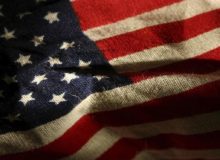
Francis Scott Key originally composed the words as a poem after witnessing the bombardment of Fort McHenry by the British Royal Navy during the Battle of Baltimore in the War of 1812. The large United States flag, which remained flying through the bombardment, had 15 stars and 15 stripes at the time.
Although most of us only know the first stanza (which is the only stanza performed at sporting events, etc.), Key originally composed four stanzas, with a fifth stanza later added during the Civil War era by Oliver Wendell Holmes Sr.
Check out this video which explains more on the song’s origin:
The Star Spangled Banner (U.S. National Anthem)
1st stanza
O say, can you see, by the dawn’s early light,
What so proudly we hailed at the twilight’s last gleaming?
Whose broad stripes and bright stars through the perilous fight,
O’er the ramparts we watched, were so gallantly streaming?
And the rockets’ red glare, the bombs bursting in air,
Gave proof through the night that our flag was still there;
O say does that star-spangled banner yet wave,
O’er the land of the free and the home of the brave?
2nd stanza
On the shore dimly seen through the mists of the deep,
Where the foe’s haughty host in dread silence reposes,
What is that which the breeze, o’er the towering steep,
As it fitfully blows, half conceals, half discloses?
Now it catches the gleam of the morning’s first beam,
In full glory reflected now shines on the stream:
‘Tis the star-spangled banner, O long may it wave
O’er the land of the free and the home of the brave.
3rd stanza
And where is that band who so vauntingly swore
That the havoc of war and the battle’s confusion,
A home and a country should leave us no more?
Their blood has washed out their foul footsteps’ pollution.
No refuge could save the hireling and slave,
From the terror of flight, or the gloom of the grave:
And the star-spangled banner in triumph doth wave,
O’er the land of the free and the home of the brave.
4th stanza
O thus be it ever, when freemen shall stand,
Between their loved home and the war’s desolation,
Blessed with vict’ry and peace, may the heav’n rescued land,
Praise the power that hath made and preserved us a nation!
Then conquer we must, when our cause it is just,
And this be our motto: “In God is our trust.”
And the star-spangled banner in triumph shall wave,
O’er the land of the free and the home of the brave!
5th stanza
When our land is illumed with Liberty’s smile,
If a foe from within strikes a blow at her glory,
Down, down with the traitor who dares to defile
The flag of her stars and the page of her story!
By the millions unchained when our birthright was gained,
We will keep her bright blazon forever unstained!
And the star-spangled banner in triumph shall wave
While the land of the free is the home of the brave!
~
More than two centuries later, the song still carries more than one meaning. It is a battle song, a survival song, a national symbol, and, for many of us, a ritual we first encountered before ballgames rather than in history books. But in Baltimore, within sight of where the flag still flew, the words become less ceremonial and more immediate. The flag was not merely a symbol. It was a sign that the country had endured another night.